
Showing posts with label the past. Show all posts

Friday, 3 May 2013

when we went to Rome

UntitledUntitledUntitledUntitled
Untitled
Untitled

A month ago I took the night train to Rome. What I liked best: climbing over a fence to enjoy a perfect view of St. Peter's, excellent ice cream flavours (rice! rosemary! sage! basil!), speaking Italian, ancient sculpture, aimless walks, you know the deal. It was good. 
I started reading Memoirs of Hadrian after observing (and laughing at) other tourists who took pictures with a giant statue of Antinous.* I wouldn't say that I like historical novels per se - in fact, I hardly ever read any - but I love fake autobiographies, especially fake autobiographies by Roman emperors. They just have so much potential to make the reader relate to the past. Years ago I read Julian by Gore Vidal, and that was the first time I actually realised that maybe one doesn't have to be an academic, a historian, to make the past come to live. That writers might actually be better at that.

*Note: in Roman museums Antinous is described as 'Hadrian's favourite', whereas in the British Museum in London he is 'the great love of his (Hadrian's) life'.

Tuesday, 12 February 2013

structure

UntitledUntitledUntitledUntitledUntitled

Out the back door and under the big ash was a picnic table. At the end of summer, 1966, I lay down on it for nearly two weeks, staring up into branches and leaves, fighting fear and panic, because I had no idea where of how to begin a piece of writing for The New Yorker. I went inside for lunch, surely, and at night, of course, but otherwise remained flat on my back on the table.

I really liked this piece in the New Yorker, do read it if you can. Structure is my main preoccupation when it comes to writing and I enjoyed McPhee's extremely methodical (almost mechanical) approach and his rejection of chronology (always the first question I asked myself when I wrote an essay about the past - how do I get rid of time?).

Sunday, 27 January 2013

a mess

P1070645Untitled 

 I remember: a year ago I sat on the floor reading David Halperin and I thought he was so clever. I still think he's clever, I just think that history is almost too complicated to say much about it. Sometimes I wonder how we manage to make sense of the past if we're incapable of making sense of our own lives. (I guess that's precisely why.)

Sunday, 30 December 2012

reality

Untitled
Untitled
Untitled
UntitledIris Murdoch

Hugging the cat, watching films - carrot soup, Christmas eve - perfume oil - cat brooches and Max Weiler, always - still thinking about Iris Murdoch.

Yes, I'm thinking about the past year too. It's been difficult, it's been beautiful, I've learned so many things, but if I were to sum it up I'd probably say that I've grown up. I read and re-read Iris Murdoch's essay The Sublime and the Good which is where the quote in the last picture is from. You may say that it's trite, but it isn't for me. It's what I'll remember when I think about 2012 in the future, because ultimately that's what all the hysterical laughter is all about, that and the occasional arguments, the sandwiches by the river, the e-mails, crying on trains, kissing on or under bridges, drinking tea or gin, hiding in the library, missing people terribly, playing ukulele to surprised people in boats, tight hugs, everything. To me, growing up is a long and painful process that has much to do with learning about other people, not just about myself. Who knows what the next year will bring? I'm guessing ch-ch-ch-changes, to quote David Bowie.

Tuesday, 3 January 2012

does not


I am ashamed to remember for how many years, as a boy and a young man, I read nineteenth-century fiction without noticing how often its language differed from ours. I believe it was work on far earlier English that first opened my eyes: for there a man is not so easily deceived into thinking he understands when he does not.
C. S. Lewis, Studies in Words

Saturday, 31 December 2011

this year was important

163813010

sometimes I can't believe it
I'm moving past the feeling


In June I watched 'Scenes from the Suburbs'. Win Butler's voice, talking about the past, got stuck in my head and provided the theme for the entire year. "I guess those aren't the pieces you remember", he said. I listened to the title track all summer long.
It was true: I really couldn't believe it. I was moving on. My life had changed abruptly in 2010; some of the most important things had fallen away. As is often the case, this turned out to be a good thing - even though it did feel terrible at the time.
2011: months spent in the library, writing my dissertation, and after that the best summer I've ever had. Weeks and weeks of feeling free. And then I moved to England, and I didn't know what to expect, and my life is not what it was but that's good. Sometimes I think back about the years before this one. It's hard to believe that they existed.

Thursday, 4 August 2011

nowhere near


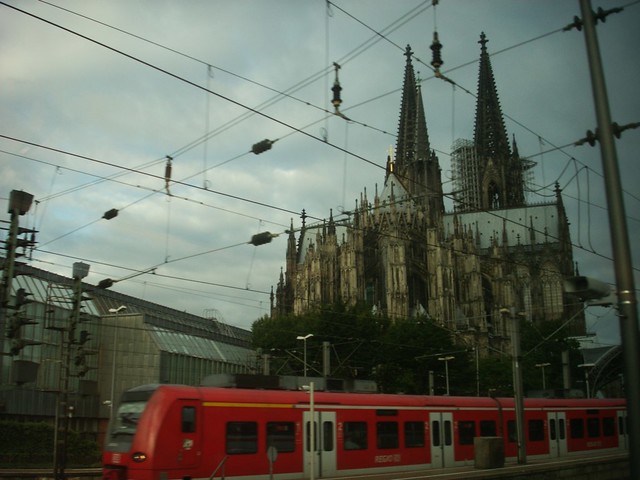
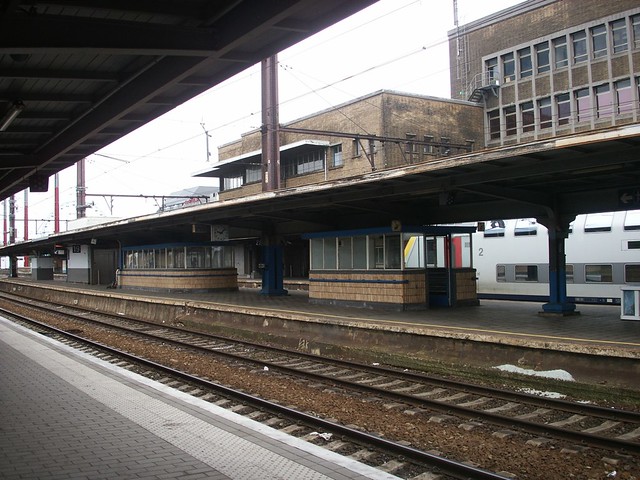
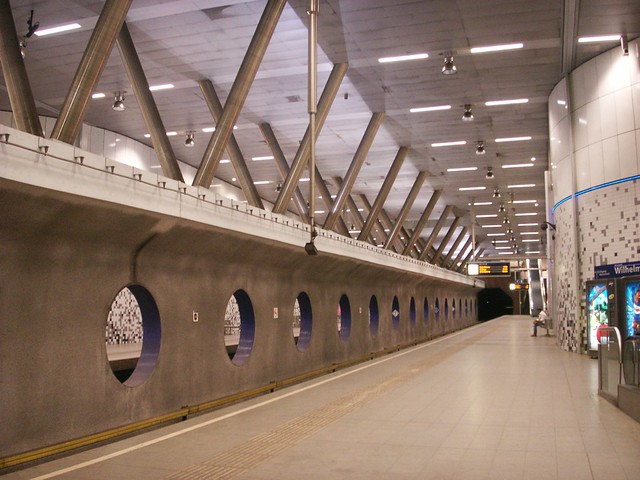
Train stations I have seen: Cologne, Brussels, Rotterdam, Alfreton.
This is the song I've been listening to since I've come home.
Fair warning to anyone who reads this: The following is a product of lack of sleep, euphoria and a terrible habit of mixing my metaphors.

Yesterday I was on a train to London, contemplating the past week or so, when I realised that there's an obvious problem with using a device like a Pensieve. (Let's just pretend for a moment that it's real. Non Harry Potter readers, I'm talking about this.) It's quite simple, really - memories aren't either pure, or have been meddled with.
In fact, they are always tainted or tinted, by other experiences or nostalgia. They are shaped by the narrative we force upon them, the stories we tell our friends and the confessional notes we scribble into journals. A wonderful, unique moment is gone in an instant, as per definition. If it is retrieved however, looked at again, it can never take the shape of those neat and orderly scenes encountered by Harry Potter when he dives into the Pensieve. We know that. Historians have tried to either ignore that fact or work around it for ages.

But still, it is a dilemma. I'd love to keep the memory of certain moments safe, like an old photograph hidden in a dark place so as to keep it from aging. This means keeping it locked up, not sharing it: The more you look at the picture, the more fragile it gets. And the more you talk about moments, share them with others, the more they turn into a story - until you can only remember them with the words you use to describe them with. And of course words aren't all that accurate.

It's similar to something I discovered when I (finally) met my friend Q again and we talked about the last time we had seen each other: Our memory was shaped by the photographs we had taken. It is confined to the limits we imposed on it.

Basically, I am facing quite a simple question: Is it better not to take any pictures? And, even more importantly: Should you avoid talking or writing about precious moments? Your memory will remain in the solitary confinement of your brain, undisturbed, it won't turn into a story that loses its depth of feeling after having been told for the third, fourth, fifth time. It will, however, be all the more prone to merge with illusions, what if's, daydreams, wishful thinking, until the original is changed, until it's hard to tell what actually happened. And one day, you'll forget about it, forget what it meant to you that day, the immediacy will be gone.

In the end, what happens is this: You sit on a train, and then later you're at Heathrow and it's six in the morning. Instead of writing down what has happened, events, people, places that have had an impact on your life, instead of facing the dilemma of turning your feelings into nothing more but words and a story because you want to keep at least a part of them alive forever... instead of doing that, you just write about what a strange thing memory is. Contemplating what has actually happened seems like a task you can't face right now.
You talk to your friend Martin who wisely says, "You're overthinking this, aren't you?"
Already, nostalgia has set in.

Later, you'll board a plane. You come home and, half-convinced that you must have been dreaming, you tell your friend all about it, just to confirm to yourself that things have happened. The moment is gone, tainted, mixed with longing and regret, just a memory, bound to fade. Only wizards and robots know how to keep them pure.